Blog
(QA)Analysis of Causes and Solutions for Common Fabric Problems --Causes and Solutions for Excessive Joints in Fabric Base Cloth
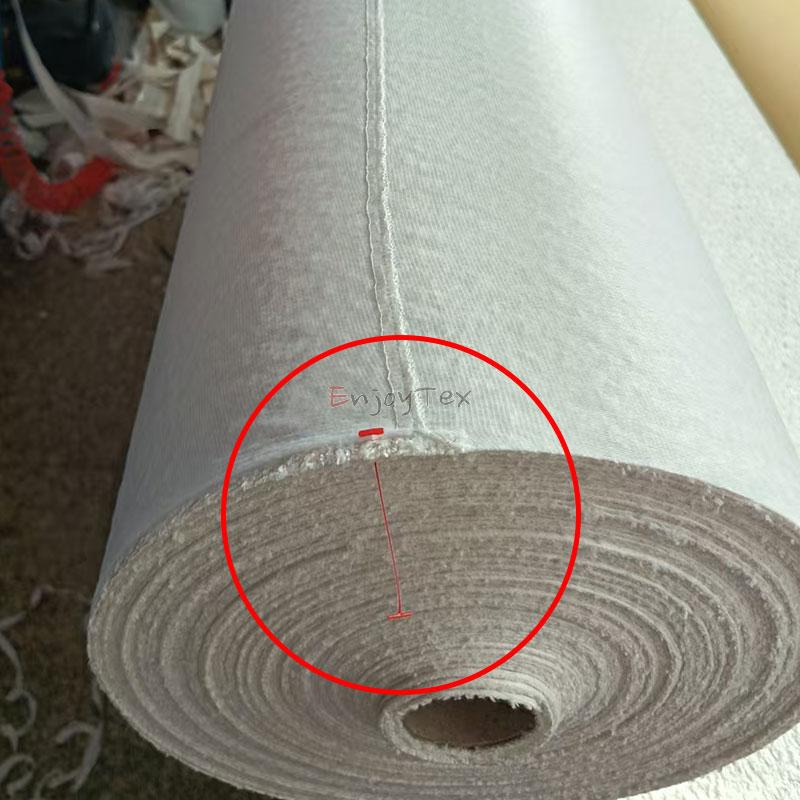
Question 1: In one batch of fabric, there are multiple base fabric joints. What causes this?
Answer:
Standard industry specifications for the length of a single roll of base fabric are as follows:
- Single-sided fleece, non-woven cotton, and non-woven fabric: approx. 100 meters per roll.
- Chunyafaxing (spring-yarn type) base fabric: approx. 500 meters per roll.
However, typical dyeing, finishing, and lamination production batches are processed in a single setting (one jigger/range) at approx. 1,000 meters.
This results in multiple base fabric joints in one batch.
- For single-sided fleece / non-woven cotton / non-woven fabric, splicing naturally produces 9 joints – this is normal for the industry.
- For Chunyafaxing base fabric, splicing 2 rolls produces only 1 joint.
Summary:
Single-sided fleece, non-woven cotton, and non-woven fabric have relatively short single-roll lengths. When processed in standard 1,000-meter batches, 9–10 joints per batch are not a quality defect; they are normal and unavoidable joints caused by the combination of raw material specifications and production batching practices.
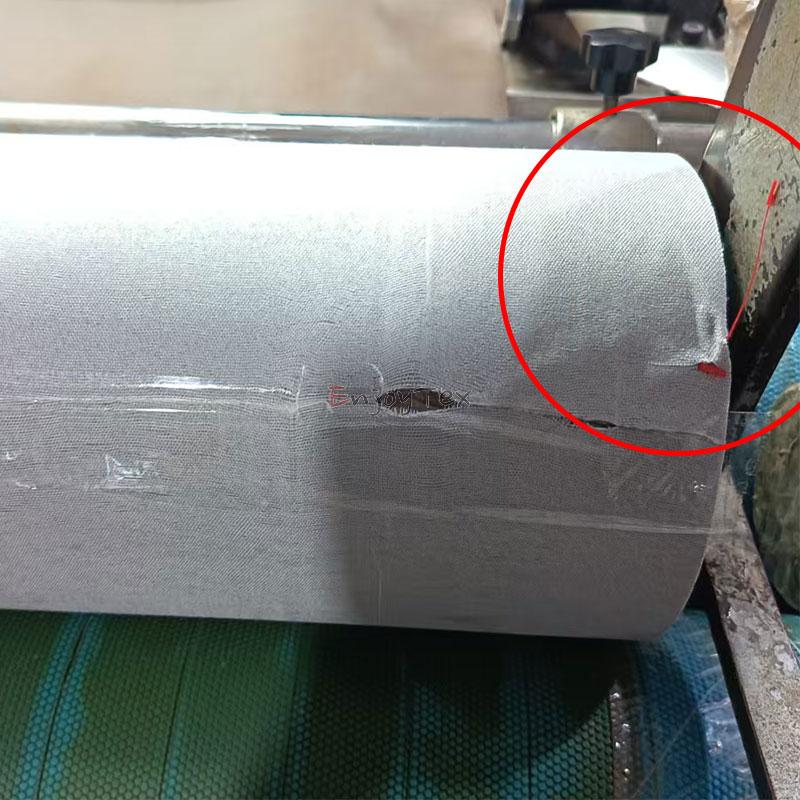
Question 2: How can we control / handle the issue of excessive base fabric joints during the final quality inspection stage?
Answer:Quality inspection procedures – specific measures:
1. Incoming inspection of base fabric – pre-screen original rolls
- During receiving and inspection, prioritize rolls that are longer, free of holes, and without defects for batching.
- Separate overly short rolls, rolls with many head/tail defects, or damaged edges – do not mix them into bulk production batches. This reduces ineffective joints and defective joints.
- Cut off defective sections at the head/tail of each roll before splicing, to avoid defects at the joint location.
2. Splicing process quality control
- Require uniform splicing standards in the workshop:
- Joints aligned flat, no wrinkles, no skewing, no excessive thickness from overlapping.
- Strong stitching – no thread loosening or seam opening.
- Good straightness of the joint to avoid subsequent weft skew or ridging at the splice.
- Prohibit diagonal splicing, random splicing, or overly wide overlaps. Use narrow, flat splicing uniformly to reduce joint thickness marks.
3. Final fabric inspection – mark every joint
- During inspection, mark each joint clearly (label, color mark) and record the meter position.
- Note: joint position, flatness, defects, and whether it can be used for first-quality products.
- Defective joints (wrinkled, skewed, holed, thick ridged) are directly marked as second quality.
4. Cutting and spreading in furniture production – precise avoidance (most critical)
- Provide the cutting department with the recorded joint positions (meter marks). During lay planning, directly avoid those positions.
- Use joint sections exclusively for small accessories, edge banding strips, small lining pieces – never for large panels, shoe uppers, or visible front surfaces.
- When spreading fabric, break the lay at the joint – do not force it flat or try to use it under tension.
5. Quality grading
- Smooth, good-quality joints: downgrade to linings, non-visible areas, or accessories.
- Joints with wrinkles, thick marks, or skewing: directly classify as second-grade or scrap – do not use in first-quality production.
- For Chunyafaxing (500 m/roll): few joints, only need to focus on flatness of the joints.
6. In-process patrol + final inspection control
- Randomly inspect joints during sewing or lamination – check for bubbling, ridge marks, or show-through.
- Final inspection of finished goods: focus on whether any joint appears on the front side, or if there are ridge marks, wrinkles, or skewing. If problems exist, pull out for rework or downgrade.
Summary – one sentence:
The number of joints cannot be completely eliminated, but by pre-screening rolls → standardizing splicing → marking joints during inspection → avoiding joints during cutting → graded usage, we can ensure that joints are not used in large panels, not on the front side, and do not cause quality complaints – minimizing the impact.

RELATED NEWS
- (QA)Causes and Solutions for Fabric Underweight 2026-05-28
- Causes and Solutions for Fabric Underweight 2026-05-28
- (QA)Causes and Solutions for Inconsistent Fabric Width 2026-05-28
- Causes and Solutions for Inconsistent Fabric Width 2026-05-28
- (QA) Analysis of Causes and Solutions for Common Fabric Problems -- Causes and S 2026-05-25
CATEGORIES
LATEST NEWS

CONTACT US
Contact: Jennie Feng
Phone: +86 18605718133
E-mail: info@enjoytex.com.cn
Whatsapp:+86 18605718133
Add: A206,10# Xiyuan Road Xihu District,Hangzhou City,310030 China