Blog
Analysis of Causes and Solutions for Common Fabric Problems-Causes and Solutions for Excessive Joints in Fabric Base Cloth
Causes and Solutions for Excessive Joints in Fabric Base Cloth
Standard roll length of common base cloth - Single-sided fleece, non-woven cotton, non-woven fabric: about 100 meters per roll - Pongee base cloth: about 500 meters per roll.
Standard production batch per vat The regular production capacity for one dyeing/finishing vat is around 1000 meters.
Quantity explanation of joints Single-sided fleece / Non-woven cotton / Non-woven fabric Each roll is 100m. A 1000m vat needs 10 rolls to be spliced, which naturally creates 9 joints. This is a normal industry situation. 3.2. Pongee base cloth Each roll is 500m. A 1000m vat only needs 2 rolls, creating only 1 joint.
Conclusion Due to the short standard roll length of single-sided fleece, non-woven cotton and non-woven fabric, there will be 9~10 joints per 1000m vat. This is not a quality defect, it is a normal splicing result caused by raw material specifications and standard production vat arrangement in the industry.
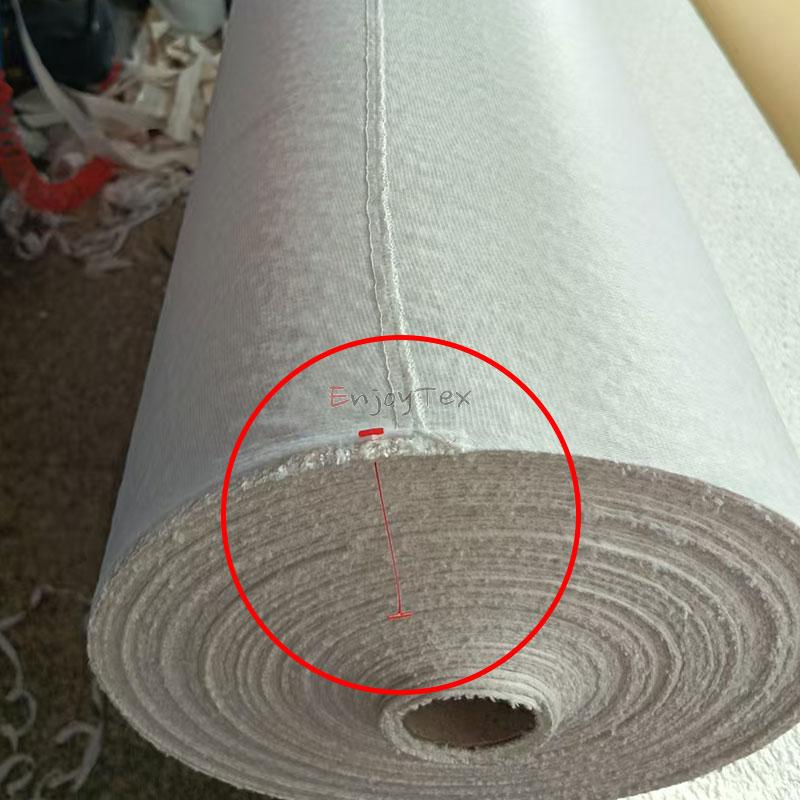
How to Control & Handle Base Fabric Joints in the Final Quality Inspection Stage 1. Current Situation The standard roll length of single-sided fleece, non-woven cotton and non-woven fabric is about 100 meters per roll. One production vat is around 1000 meters, which inevitably produces 9–10 joints. The number of joints cannot be completely eliminated; we can only avoid risks in advance, mark and isolate joints, grade usage, and strictly control joint quality. 2. Practical Control Measures in Quality Inspection 1) Incoming Fabric Inspection & Raw Roll Screening 1. During incoming inspection, select rolls with longer length, no holes and no defects first for vat splicing. 2. Separate rolls that are too short, with end defects or damaged selvedges; do not mix them into bulk production to avoid defective joints. 3. Cut off defective parts at the start and end of each roll before splicing, to prevent defects staying at the joint position.
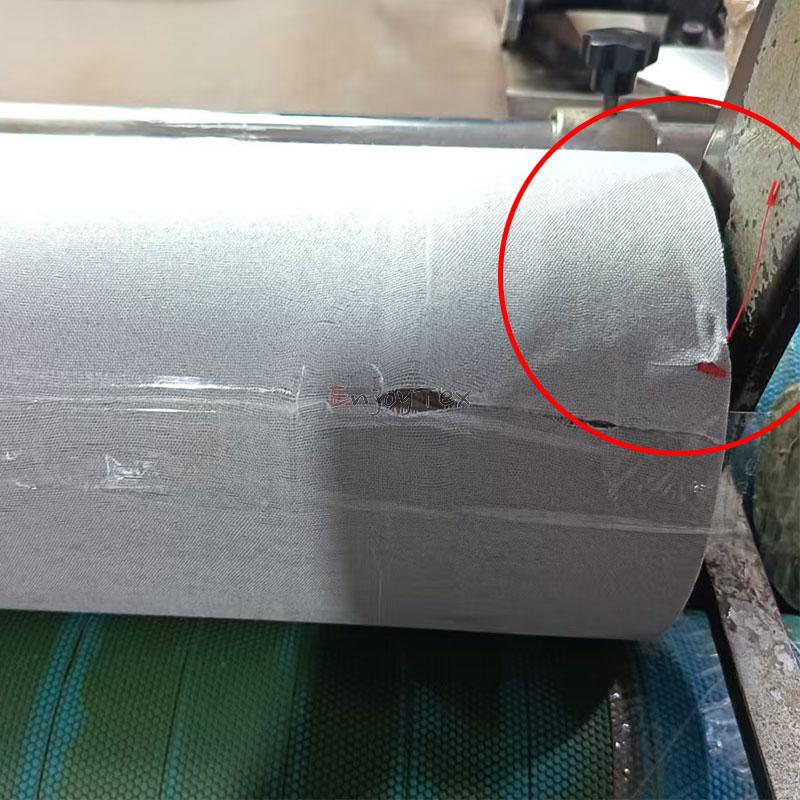
2) Quality Control During Splicing Process 1. Unify the standard splicing requirements: - Joints must be aligned flat, no wrinkles, no skew, no excessive overlapping thickness. - Stitching must be firm, no loose threads or splitting. - Keep joints straight to avoid weft skew and ridging after production. 2. Forbid diagonal splicing, irregular splicing and overly wide overlapping; adopt standard narrow flat splicing to reduce thickness marks. 3) Finished Fabric Inspection & Marking 1. Clearly mark every joint with labels or color tags, and record the exact meter position. 2. Mark each joint with information: position, flatness, defects, and whether it can be used for qualified products. 3. Mark defective joints (wrinkles, skew, holes, heavy ridge marks) directly as second-grade material. 4) Cutting Layout & Joint Avoidance (Key Step) 1. Provide all joint meter positions from inspection records to the cutting room. Arrange pattern layout to avoid all joint positions. 2. Use joint sections only for small accessories, binding strips and inner lining parts; forbid using joints on main body parts or visible outer surfaces. 3. Break the spreading length at joint positions; do not force stretching for continuous layout. 5) Quality Grading & Classification - Flat qualified joints: used only for inner layers and invisible accessories. - Joints with wrinkles, thick marks or skew: classified directly as seconds or waste, not allowed in bulk qualified production. - Pongee base fabric (500m per roll): fewer joints, only focus on checking joint flatness. 6) In-process Patrol Inspection & Final Inspection 1. Patrol check whether joints cause bulging, strip marks or shadow marks after lamination and sewing. 2. In final finished inspection, focus on checking: whether joints appear on the outer surface, and whether there are ridge marks, wrinkles or skew. Defective goods shall be sorted out for rework or downgrade. 3. Auxiliary Ways to Reduce Joints at the Source 1. Purchase longer roll lengths (150m / 200m rolls if available) to reduce splicing times and joint quantity. 2. Arrange vat production reasonably by matching roll lengths, using full rolls as much as possible to avoid small leftover rolls. 3. Splice only base fabrics with the same batch, weight and hand feel, to prevent wrinkling, weft skew and color difference caused by different fabric properties. 4. Summary The quantity of joints cannot be completely reduced, but we can minimize quality complaints by: Raw roll screening → Standardized splicing → Joint marking → Cutting avoidance → Graded usage, ensuring joints are not used on main body or visible outer parts.

RELATED NEWS
- (QA)Causes and Solutions for Fabric Underweight 2026-05-28
- Causes and Solutions for Fabric Underweight 2026-05-28
- (QA)Causes and Solutions for Inconsistent Fabric Width 2026-05-28
- Causes and Solutions for Inconsistent Fabric Width 2026-05-28
- (QA) Analysis of Causes and Solutions for Common Fabric Problems -- Causes and S 2026-05-25
CATEGORIES
LATEST NEWS

CONTACT US
Contact: Jennie Feng
Phone: +86 18605718133
E-mail: info@enjoytex.com.cn
Whatsapp:+86 18605718133
Add: A206,10# Xiyuan Road Xihu District,Hangzhou City,310030 China